
Your home may hold equity you can use for renovations, debt consolidation, or another major expense. But how you borrow against that equity affects your payments, interest costs, and repayment plan. When comparing a HELOC vs mortgage, most existing homeowners are choosing between a home equity line of credit and mortgage refinancing. A HELOC lets you access funds as needed within an approved limit. Refinancing can release equity through a mortgage with scheduled principal and interest payments. Some lending arrangements combine a mortgage and a HELOC. The right fit depends on how much you need, when you need it, and the terms of your existing mortgage.
This guide compares the costs, qualification requirements, flexibility, and risks. If you’re exploring a HELOC in Toronto, these differences can help you prepare for a more useful conversation with a mortgage adviser.
HELOC vs Mortgage: Key Differences at a Glance
The main difference is how you access and repay the money. A home equity line of credit lets you borrow as needed within an approved limit, repay it, and use that credit again. Mortgage refinancing can release equity through a loan repaid on a set schedule.
For an existing Toronto homeowner, here’s how the two options generally compare:
| Feature | HELOC | Mortgage refinancing |
| Access to funds | Draw money as needed within your available credit limit. | Receive additional funds when the refinance closes. |
| Interest rates | Usually variable, meaning borrowing costs can change. | Fixed or variable, depending on the mortgage selected. |
| Regular payments | Some agreements allow interest-only minimum payments. Paying only interest leaves the principal owing. | Scheduled payments include principal and interest. |
| Borrowing again | Repaying principal generally makes credit available again within the approved limit. | Paying down the mortgage does not automatically let you withdraw that money again. |
| Upfront costs | May include appraisal, legal, and registration costs. | May include appraisal and legal costs, plus a prepayment penalty if you break your existing mortgage contract. |
| Repayment flexibility | Generally allows principal repayments without a prepayment penalty; confirm the agreement. | Extra payments depend on the mortgage’s prepayment privileges and conditions. |
Features vary by lender and agreement. Review the actual payment requirements, fees, and repayment terms before comparing offers.
A lower monthly payment does not necessarily mean a lower total cost. An interest-only HELOC payment leaves your borrowed balance unchanged. A mortgage payment also reduces principal, so comparing payment amounts alone can give a misleading picture.
Compare both options using the same borrowing amount and repayment goal. Include interest, fees, any mortgage penalty, and the balance you would still owe at the end of that period.
Both options use your home as security. If you cannot repay the debt, your property may be at risk.
How HELOCs and Mortgages Work
A HELOC and a mortgage both use your home as security, but they give you different ways to borrow and repay money. Understanding that structure helps you compare options beyond the advertised interest rate.
What Is a Home Equity Line of Credit?
A home equity line of credit, or HELOC, is revolving credit secured against your home. You can borrow within an approved limit, repay the balance, and use the available credit again. Interest applies to the amount you actually borrow.
For example, suppose you have a $60,000 HELOC limit and withdraw $15,000 for renovation expenses. You pay interest on the $15,000 balance, rather than the full approved limit. Repaying $5,000 of principal generally restores that amount to your available credit.
Your minimum payment depends on the agreement. Some HELOCs allow interest-only payments, but those payments do not reduce what you borrowed. You need to pay principal as well to clear the debt.
If you’re considering a HELOC in Toronto, ask about the rate, minimum payment, setup costs, and principal repayment options.
How Does Mortgage Refinancing Work?
Mortgage refinancing replaces your existing mortgage with a new one. If you qualify for a larger mortgage, you may receive additional funds by borrowing against your home equity.
Unlike revolving credit, an amortizing mortgage has scheduled payments that cover principal and interest. Two timelines matter:
- Mortgage term: How long your current mortgage agreement lasts.
- Amortization: The planned time needed to repay the mortgage in full.
Refinancing differs from a straightforward renewal. Renewal continues your mortgage under a new term; refinancing can change the borrowing amount and financing arrangement. Breaking an existing mortgage contract may also trigger a prepayment penalty.
What Is a Combined Mortgage and HELOC?
A combined arrangement includes a mortgage and a HELOC with the same lender. The mortgage portion follows its repayment schedule, while the HELOC provides revolving credit.
These arrangements are often called readvanceable mortgages because paying down eligible mortgage principal can increase available HELOC credit. The amount and timing depend on the product’s rules and applicable lending limits.
A standalone HELOC operates independently: its limit does not automatically increase when you repay your mortgage. An amortizing home equity loan is different again; it provides a lump sum with scheduled principal and interest payments.

How Much Home Equity Can You Borrow?
Your home equity and your borrowing limit are different amounts. Equity measures your ownership stake in the property. Your borrowing limit depends on the financing structure, lender requirements, and your ability to repay.
Calculate Your Equity and Loan-to-Value Ratio
Start with the property’s appraised value, then subtract all outstanding debt secured against it. Include your mortgage, any HELOC balance, and other secured loans.
Consider this hypothetical Toronto property, with figures in CAD:
| Item | Amount |
| Appraised home value | $1,000,000 |
| Outstanding mortgage | $500,000 |
| Other debt secured against the property | $0 |
| Home equity | $500,000 |
This homeowner has 50% equity. Their current loan-to-value ratio, or LTV, is also 50%:
$500,000 secured debt ÷ $1,000,000 property value × 100 = 50% LTV
That does not mean they can borrow another $500,000. Lenders apply borrowing limits and assess the application before approving additional credit.
Understand Standalone and Combined Borrowing Limits
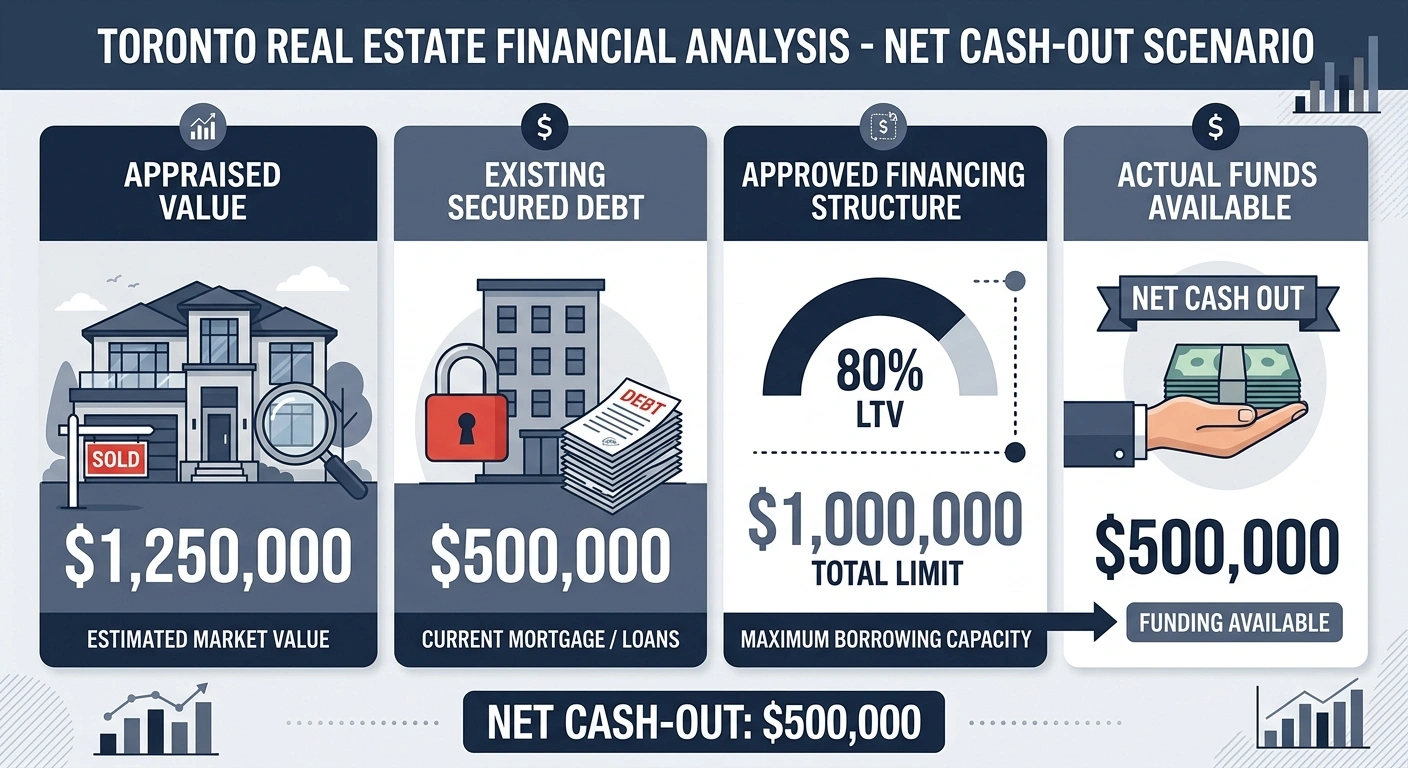
The Financial Consumer Agency of Canada states that a HELOC may allow borrowing up to 65% of your home’s value. Existing secured borrowing and the product structure also affect how much credit is available.
For federally regulated lenders, a combined mortgage and HELOC plan cannot exceed 80% LTV. Borrowing above 65% LTV must be amortizing and non-readvanceable: principal repayments on that portion reduce the overall authorized limit rather than automatically creating reusable HELOC credit.
Using the same hypothetical property:
| Combined financing calculation | Amount |
| 80% of the $1,000,000 appraised value | $800,000 |
| Less the existing mortgage balance | $500,000 |
| Potential additional borrowing before fees and approval | $300,000 |
The $300,000 is potential room within the overall financing limit, not a guaranteed HELOC limit. The lender must determine how the mortgage and revolving credit portions are structured.
Mortgage refinancing commonly allows total secured borrowing up to 80% of the property’s value, subject to approval. Existing secured balances reduce the additional amount available.
Before planning around an estimate, ask the lender to confirm:
- The property value used in its assessment.
- How existing mortgages and credit facilities affect the calculation.
- The approved revolving credit limit and amortizing loan amount.
- How much money remains available after fees.
Qualifying for a HELOC or Mortgage Refinance in Toronto
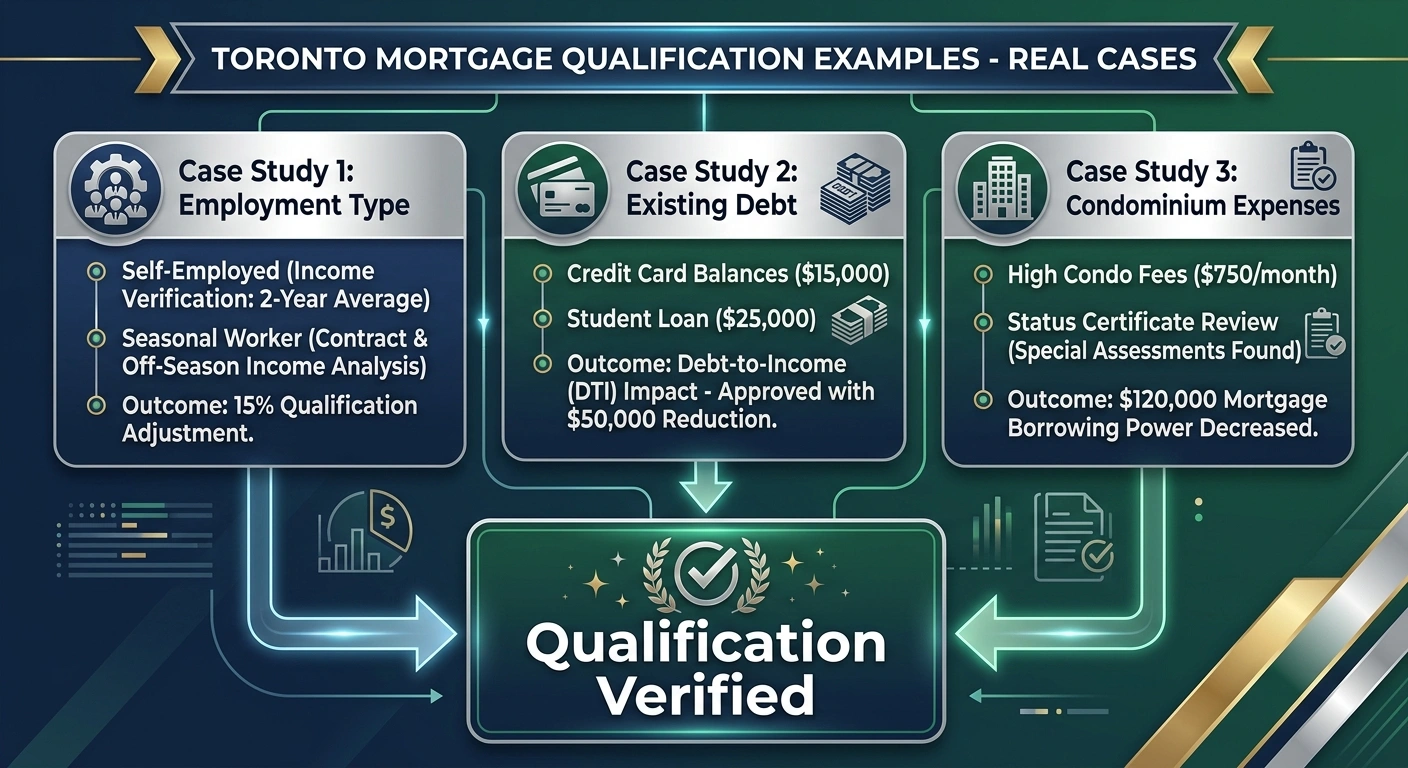
Having equity is only part of qualifying. A lender also assesses your income, credit history, existing debts, and property before approving additional borrowing.
Income, Credit, Debt, and Property Requirements
Your application needs to show that you can manage the new borrowing alongside your existing expenses. Lenders generally review:
- Income: Its amount, stability, and supporting documents.
- Credit history: Your record of managing credit and making payments.
- Debt obligations: Mortgage payments, credit cards, loans, and other commitments.
- Property: Its appraised value and existing secured financing.
A higher property value does not automatically mean a larger approval. Your repayment capacity and the lender’s policies also affect the amount available.
Stress testing matters when accessing equity. FCAC states that homeowners refinancing or taking out a HELOC at a bank must pass an applicable mortgage stress test. This assesses affordability at a qualifying rate higher than the rate used for actual payments.
As checked in October 2026, OSFI’s minimum qualifying rate for uninsured mortgages at federally regulated lenders is the greater of 5.25% or the contract rate plus two percentage points. For example, a hypothetical 5% mortgage rate would mean qualifying at 7%. Confirm the requirements for your specific lender and transaction.
Documents to Prepare Before Applying
Ask your adviser for a checklist tailored to your employment and financing needs. Commonly requested information includes:
| Category | Documents or details to prepare |
| Identification | Government-issued identification |
| Employment income | Recent pay statements and an employment letter |
| Self-employment income | Tax returns, Notices of Assessment, and business income records, as requested |
| Existing financing | Mortgage statement, current rate, renewal date, and HELOC or other secured loan details |
| Other debts | Current balances and payments for credit cards, loans, and credit lines |
| Property expenses | Property tax statement and applicable condominium fees |
| Borrowing request | Amount needed, intended use, and preferred repayment timeline |
Income documentation varies by applicant and lender. FCAC also identifies proof of ownership, mortgage details, and a property appraisal among the information a HELOC lender may require.
For a Toronto condo owner, include condominium fees when discussing affordability. For a self-employed homeowner, confirm how the lender will assess income before planning around a borrowing estimate.
Which Option Fits Your Borrowing Needs?
The better fit depends on when you need the money, how you plan to repay it, and what changing your existing mortgage would cost.
Use these scenarios to identify the questions worth discussing with your adviser:
| Your situation | Option to explore | Main question |
| Renovation bills arriving in stages | HELOC | Can you manage changing interest costs and repay principal? |
| A known expense with a firm repayment goal | Mortgage refinancing | Do the overall savings justify fees and changes to your existing mortgage? |
| Consolidating higher-interest debts | Compare both | Will the new arrangement reduce total costs without extending debt unnecessarily? |
| Borrowing while keeping an existing mortgage | Separately arranged HELOC, if available | Can it be added without replacing your current financing? |
| Borrowing near mortgage renewal | Compare refinancing and HELOC structures | How do timing, fees, and repayment terms affect the full cost? |
Renovations With Expenses Paid in Stages
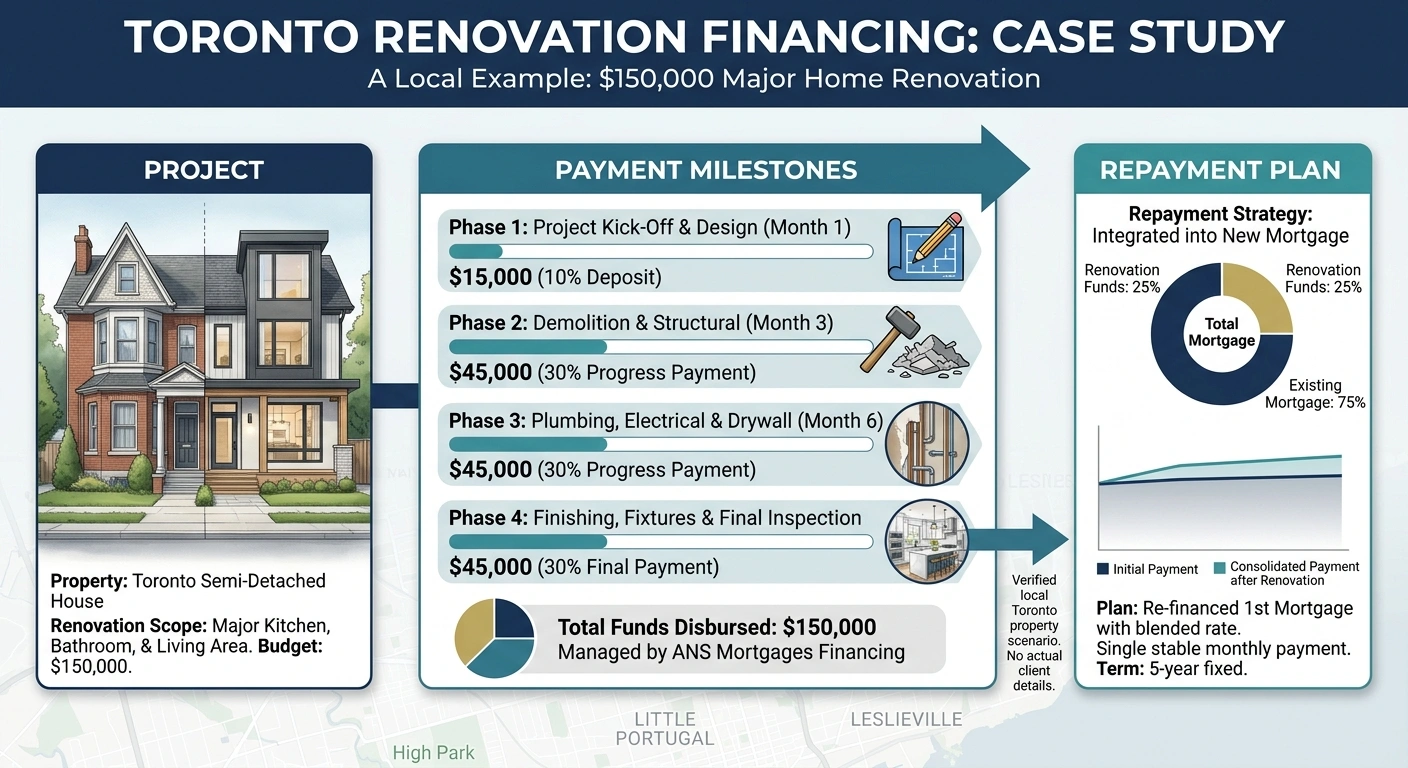
A HELOC can suit a project where deposits, materials, and contractor payments fall on different dates. You draw funds as needed and pay interest on the amount borrowed.
For a hypothetical Toronto kitchen renovation, you might need an initial deposit followed by payments at agreed project milestones. Accessing funds in stages can avoid borrowing the entire budget before you need it.
Set a borrowing cap and a principal repayment target before work starts. Include a contingency in your project budget, but avoid treating unused credit as permission to expand the renovation.
Debt Consolidation With a Defined Repayment Plan
Both a HELOC and refinancing may help replace higher-interest debt. However, a lower rate does not guarantee savings if you stretch repayment over a much longer period. Continuing to spend on cleared credit cards can also rebuild the debt.
Compare:
- Total interest and fees.
- The planned date for clearing the debt.
- Affordable payments that reduce principal.
- Measures to prevent further borrowing.
Using home equity also secures the borrowing against your property. That changes the consequences of failing to repay, particularly when replacing previously unsecured debt.
A scheduled mortgage repayment may help someone who wants a defined repayment structure. A HELOC requires a deliberate payoff plan if its minimum payment covers only interest.
Keeping Your Existing Mortgage or Borrowing Near Renewal
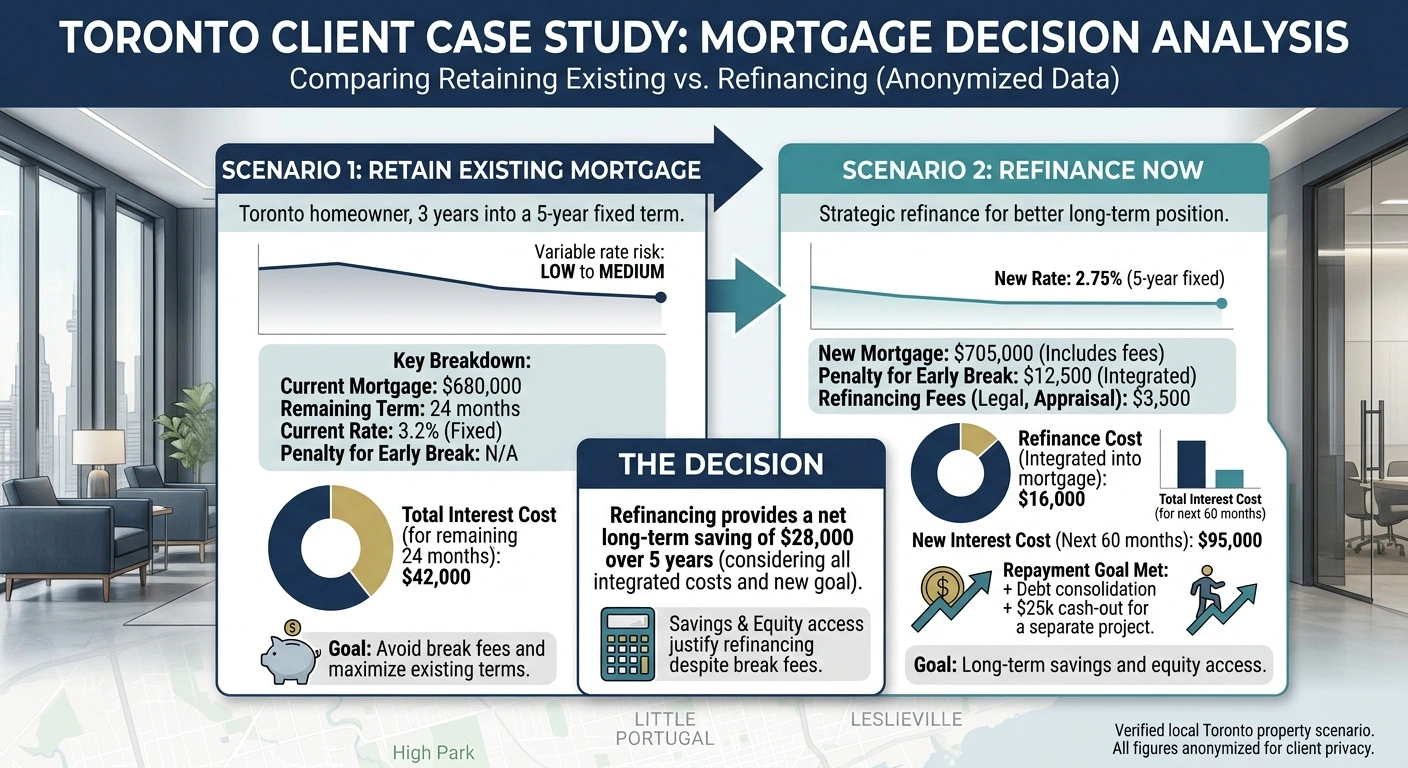
If your mortgage has favourable terms, compare the cost of keeping it and adding a HELOC with the cost of refinancing. A separately arranged HELOC may be possible, but lender approval and registration requirements still apply.
Request the existing lender’s written prepayment quote. Breaking or transferring a mortgage before its term ends can trigger a penalty.
As renewal approaches, compare options early. Changing financing at the end of the term may avoid an early-break penalty, but legal, discharge, or registration costs can still apply. Switching lenders also requires approval.
Risks to Consider Before Borrowing Against Your Home
Before taking on additional debt, check whether your repayment plan would still work if rates increased, your income dropped, or an unexpected expense arose.
Rising Rates and Payment Changes
Most HELOCs have variable interest rates. A rate increase can raise the interest charged and your required payments, putting pressure on your monthly budget.
Test your budget at a higher rate before borrowing. Include property taxes, insurance, condominium fees where applicable, and regular household expenses.
A fixed mortgage rate offers stability during its term, but your rate may change at renewal. Avoid building a long-term repayment plan around today’s payment alone.
Interest-Only Payments and Persistent Debt
Paying only HELOC interest keeps the account serviced but does not reduce the principal. Easy access to reusable credit can also encourage repeated borrowing.
Set clear safeguards:
- Choose a borrowing cap based on your needs.
- Schedule principal payments alongside interest.
- Set a target date for clearing the balance.
- Review progress before making further withdrawals.
Refinancing also needs a repayment check. Extending the repayment period can lower monthly payments while increasing total interest, particularly when consolidating shorter-term debts.
Securing Debt Against Your Property
Both options put your home behind the borrowing. If you cannot repay, the lender may take steps against the property. A HELOC must also be repaid when you sell your home.
Read the agreement’s terms for rate changes, credit restrictions, and repayment demands. Ask the lender to explain any conditions you do not understand before signing.
For a Toronto homeowner considering a future move, include outstanding secured debt and closing costs in the sale budget. Your expected sale price is different from the amount you would keep after those obligations.
![A verified Toronto example showing how a repayment buffer or borrowing cap helped a homeowner manage changing expenses.]](http://www.ansmortgages.com/wp-content/uploads/2026/10/Securing-Debt-Against-Your-Property.webp)
Frequently Asked Questions
Can You Have a Mortgage and a HELOC Together?
Yes. A combined mortgage and HELOC uses the same lender for both components. A standalone HELOC operates independently and may be arranged with a different lender, subject to approval and the existing financing arrangements.
Ask how the credit limit works and whether mortgage principal repayments will increase your available HELOC credit.
Is a HELOC Cheaper Than Mortgage Refinancing?
There is no universal winner. Compare the interest charged, setup fees, any mortgage prepayment penalty, and your repayment timeline. HELOC fees and mortgage breakage costs can affect the result.
A HELOC may offer a lower required payment if only interest is due, but the principal remains outstanding. If refinancing changes your existing mortgage rate, include that change in the comparison.
Can You Use a HELOC to Pay Off Your Mortgage?
It may be possible if your approved available credit is sufficient and the agreements permit it. However, transferring the balance moves the debt; it does not eliminate it.
Compare the HELOC rate, principal repayment plan, and any charge for paying out the mortgage early. HELOC rates are usually variable, and repaying a mortgage before its term ends may trigger a penalty.
Does a HELOC Affect Switching Mortgage Lenders?
It can, particularly when the mortgage and HELOC share a collateral charge. Switching may require discharging the existing charge and registering new security, with associated fees.
Before accepting a new mortgage offer, ask both lenders what happens to the HELOC, whether its balance must be repaid, and which costs apply.
What Happens to a HELOC at Mortgage Renewal?
The mortgage term and the HELOC’s conditions are different parts of the financing arrangement. Do not assume renewing the mortgage automatically closes, renews, or changes the HELOC.
For a combined product, ask your lender to confirm the HELOC’s continuing rate, limit, and payment requirements. If you plan to switch lenders, request written instructions for handling both components. Combined HELOCs depend on the mortgage relationship with the same lender.
Explore Your HELOC Options in Toronto
Choosing between a HELOC and mortgage refinancing starts with your borrowing needs and a realistic repayment plan. Compare the full cost, including changes to your existing mortgage, rather than focusing only on the monthly payment.
Explore HELOC options in Toronto through ANS Mortgages and request a comparison based on your circumstances.
To prepare for the conversation, gather:
- Your estimated property value and outstanding secured balances.
- Your current mortgage rate and renewal date.
- The amount you need and when you need it.
- Your monthly repayment budget and target payoff date.
Contact ANS Mortgages to discuss your home equity options, including the costs, qualification requirements, and repayment structure of each available offer.
Business name: ANS Mortgages
Address or service area: Toronto, Ontario
Phone: +1647 – 382 – 1155
This guide provides general educational information. Available financing and approval depend on your circumstances, the property, and lender requirements.

